Home / Health Insurance / Articles / Individual Health Insurance / Family Health Insurance vs Individual Health Insurance: Key Differences
Family Health Insurance vs Individual Health Insurance: Key Differences
Roocha KanadeDec 10, 2025
Share Post
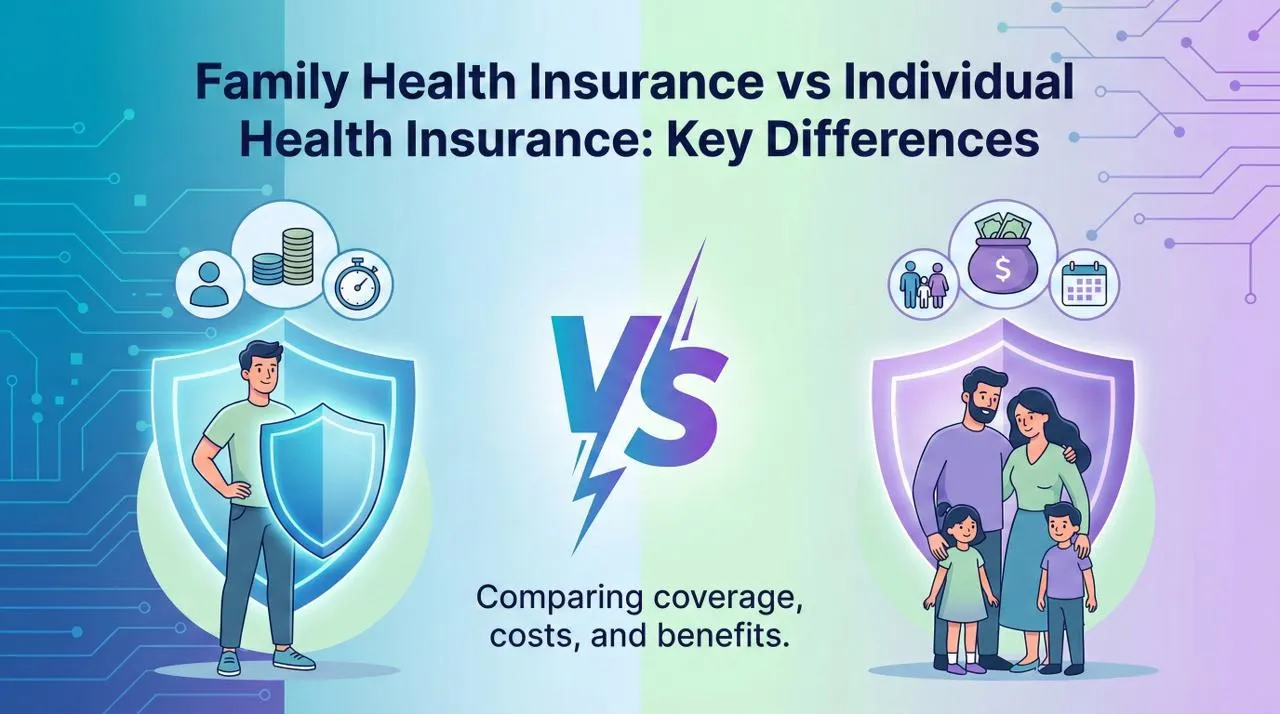
When choosing health insurance, one common confusion is which plan to go for, an individual policy or a family floater. Both of these plans offer comprehensive health insurance coverage and help during medical emergencies. Both have their pros and cons depending on your needs. But which one will give you the maximum benefits and value for money? Here’s a simple breakdown of family health insurance vs individual health insurance, their benefits, differences, and how to choose the right one.
Contents

- What is Individual Health Insurance?
- What is Family Health Insurance (Family Floater Plan)?
- Family Health Insurance vs Individual Health Insurance: Key Differences
- Which is Better: Family or Individual Health Insurance?
- Pros and Cons of Family vs Individual Health Insurance
- How to Choose Between Family and Individual Health Insurance
- Conclusion
- Frequently Asked Questions
What is Individual Health Insurance?
An Individual health insurance plan offers coverage to one person. This plan includes coverages like pre-hospitalisation, hospitalisation, post-hospitalisation, ICU costs, surgery costs, daycare treatment, cashless claims, etc.
An individual health plan is a good fit for young adults, and for people who need frequent medical treatment and are looking for personalised cover. They can use all the sum insured for themselves. So go for this plan if you are looking for a stable, dedicated coverage that aligns with your medical needs.
What is Family Health Insurance (Family Floater Plan)?
Family Health Insurance or commonly known as a family floater plan provides coverage to the immediate members of one family. They can share the sum insured of the plan for multiple different treatments for different insured members. Family members like self, spouse, dependent children, parents or parents-in-law can be insured under this plan. A family floater health plan is an ideal choice for young families with lower medical needs. Buying one policy is more affordable as compared to getting separate plans for each member.
Family Health Insurance vs Individual Health Insurance: Key Differences
Here is a quick comparison that shows how the two plans differ. If your family members have very different ages or health conditions, individual plans offer stronger protection because each person gets their own cover. For young couples or families with children, a floater plan is often more affordable while still providing adequate cover.
| Parameter | Family Health Insurance | Individual Health Insurance |
|---|---|---|
| Coverage | Shared sum insured for all family members | Separate sum insured for each person |
| Premium | Usually lower for young families | Based on each individual’s age and health |
| Claims | One member’s claim reduces total cover left for others | Claims do not affect another person’s cover |
| Ideal For | Families with dependents and similar health risks | Singles, individuals with higher health risks, senior members |
| Flexibility | Limited flexibility because the cover is shared | Highly customisable with add ons and dedicated cover |
| Tax Benefits | Combined deduction under section 80D | Separate tax deduction for each policy |
If family members have varied ages or health conditions, individual health insurance offers better protection. For young families, a floater plan can be a more affordable choice.
Which is Better: Family or Individual Health Insurance?
The answer to which plan is better, family floater or individual, depends on things like how much coverage you need, what is your medical history, how often do you claim, your budget, etc. A young couple with one child may find a floater plan better than an individual plan. The premium is lower and the chances of multiple claims in the same policy year are less. On the other hand, if you are buying cover for elderly parents or someone with a medical history, an individual policy is usually safer.
Example: Nirja has 5 members in her family including her husband, one child, and parents-in-law. Buying separate plans of a minimum of ₹5 lakh sum insured would cost around ₹60,000 to ₹70,000. This is because the premium for senior citizen health plans is higher and would increase the total cost.
Instead she can opt for one family floater plan for self, husband, and their child. Then buy separate individual plans for senior citizen parents. This is more affordable as well as they all don’t need to depend on each other for medical insurance coverage.
Takeaway: A family floater for young and healthy members and individual plans for parents and senior citizens gives the right balance of affordability and protection. The ideal setup for most families is a mix, a floater for young members and separate individual plans for parents.
Pros and Cons of Family vs Individual Health Insurance
Here are the advantages and disadvantages of each type of health plan.
Advantages of Family Health Insurance
✔ One premium for all members
✔ Easy to manage across the family
✔ Cost effective for young families with lower health risks
Disadvantages of Family Health Insurance
X One person’s claim reduces the sum insured for everyone
X Renewal premium increases based on the age of the eldest member
Advantages of Individual Health Insurance
✔ Separate cover for each person
✔ Premium remains unaffected even if another family member claims
✔ Better suited for senior citizens or members with health conditions
Disadvantages of Individual Health Insurance
X Total premium is higher if you buy separate policies for each family member
Also read: Benefits of Individual Health Insurance
How to Choose Between Family and Individual Health Insurance
This decision will be easier if you weigh the needs and family's medical history while choosing a health plan. Here are a few tips.
Start with age and medical history: A family floater usually suits younger families who rarely fall ill. But if your parents live with you or someone needs regular care, individual plans often give stronger, more reliable protection.
Weigh premiums against real coverage: A floater may look cheaper at first, but everyone shares the same pot of money. Individual plans cost more, yet each person gets their own full cover with no compromises.
Plan for the future: Planning to have another child or add your parents later. Floaters allow easy additions, but the premium can climb quickly as the family grows or ages.
You can also compare plans to see which plan offers the best health insurance coverage suitable for you and your family.
Also read: How to Compare Individual Health Insurance Plans: What to Check Before Buying
Conclusion
Both family and individual health insurance plans have their own set of advantages. The best option depends on your family’s age, medical history, and financial comfort. Think about how each member’s health needs may change over time and choose a plan that gives long term protection. A thoughtful decision today ensures smoother healthcare access and better financial security for your entire family.
Frequently Asked Questions
Here are common questions on Family Health Insurance vs Individual Health Insurance: Key Differences

What is the main difference between family and individual health insurance?
The main difference between family and individual health insurance is that family health insurance offers coverage to multiple members of one family. An individual plan offers health insurance to one person.
Which is more affordable, family or individual plans?
A family health plan is more affordable for young families. Individual plans can cost more for this type of family construct.
Can I have both family and individual health insurance?
Yes, buying both types of plans is an ideal choice for many families. You can get comprehensive coverage under these plans.
Do both plans offer tax benefits
Yes, both plans allow tax deductions under section 80D, although the calculation differs.
Explore More Articles on Individual Health Insurance
Explore Our Comprehensive Health Insurance Options

Recent
Articles
Family Health Insurance vs Individual Health Insurance: Key Differences
Roocha Kanade Dec 10, 2025
Why Should Every Woman Have an Individual Health Insurance Plan?
Roocha Kanade Dec 10, 2025
Advantages of Individual Health Insurance for People Aged 20 to 35
Roocha Kanade Dec 10, 2025
Top Reasons Why Individual Health Insurance Applications Get Rejected
Roocha Kanade Dec 10, 2025
How Pre-existing Diseases Impact Your Individual Health Insurance Premiums
Roocha Kanade Dec 10, 2025
All Articles


Want to post any comments?

Discover our diverse range of Health Insurance Plans tailored to meet your specific requirements🏥
✅ 100% Room Rent Covered* ✅ Zero deductions at claims ✅ 7100+ Cashless Hospitals

Check health insurance


Acko Technology & Services Private Limited
#36/5, Hustlehub One East, Somasandrapalya, 27th Main Rd, Sector 2, HSR Layout, Bengaluru, Karnataka 560102


Acko Group Companies:
Download our ACKO app now!


Products
Company
Support
Car Insurance
Bike Insurance
Health Insurance
- Health Insurance
- Health Insurance Plans
- 10 Lakhs Health Insurance
- 50 Lakhs Health Insurance
- 1 Crore Health Insurance
- Health Insurance Plans For Family
- Individual Health Insurance
- Cashless Health Insurance
- Women's Health Insurance
- Health Insurance For Parents
- Health Insurance For Senior Citizens
- Health Insurance Premium Calculator
- Waiting period in health insurance
- Health Insurance Portability
- Super Top Up Health Insurance
Group Health Insurance
Travel Insurance
CIN: U74110KA2016PTC120161
The use of images and brands are only for the purpose of indication and illustration.